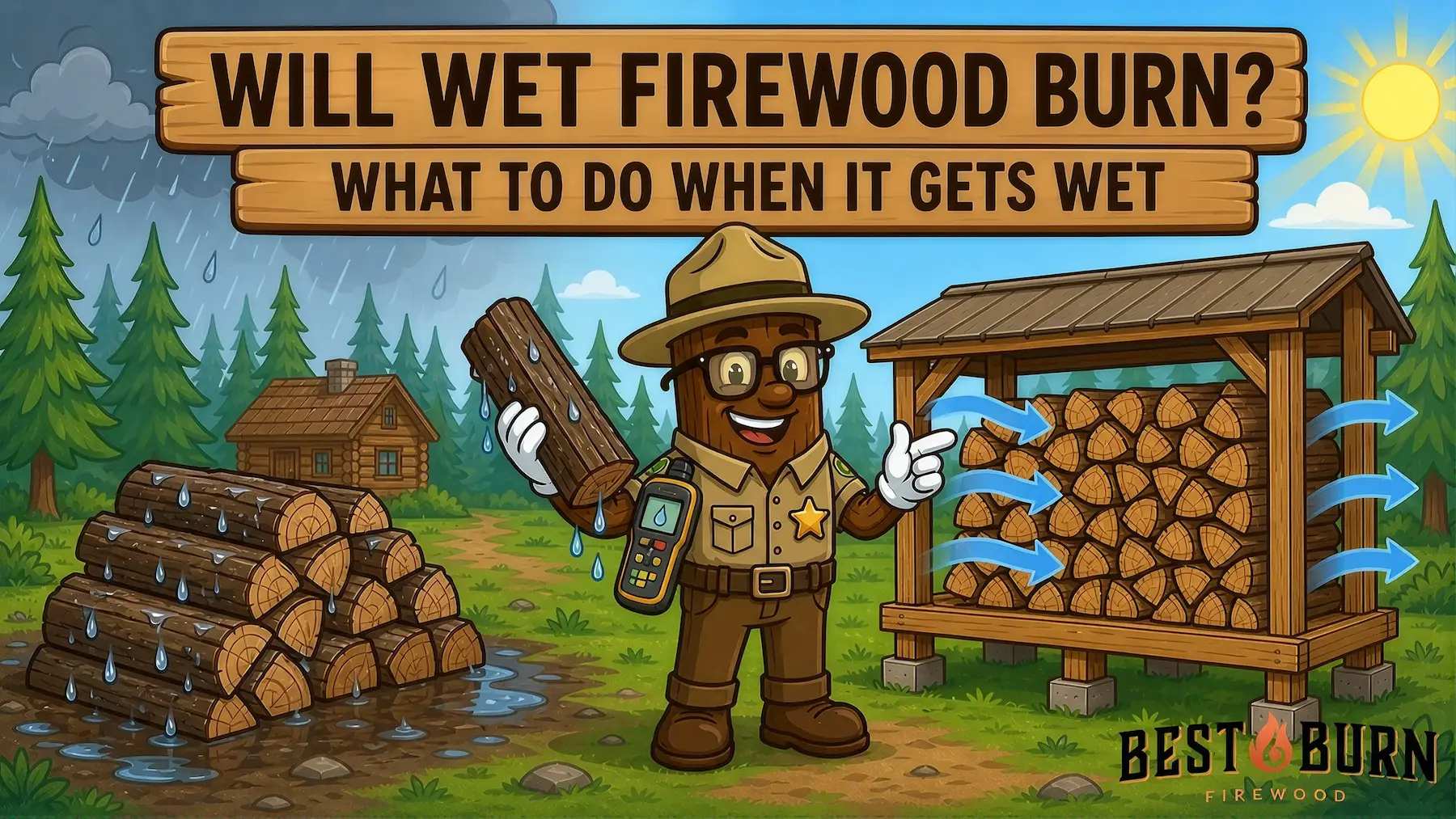
Your firewood got rained on, and now you are looking at a stack you thought was ready to burn, wondering if you just wasted your money.
Here is the short answer: it is almost certainly fine. Wet firewood will still burn, and seasoned or kiln-dried wood that caught some rain is not ruined. The water is sitting on the surface, and surface water dries back out.
The only wood that truly goes bad is wood that can never dry out again, and a single rainfall is nowhere close to that.
We run kilns and deliver firewood across SE Wisconsin, and we field this exact call all the time, especially when it rains on a delivery day. This guide covers what actually happens when firewood gets wet, when it is genuinely a problem and when it is not, and how to get a damp fire going when you need one.
Will Wet Firewood Burn?
Yes, in almost every case. The question that actually matters is not wet or dry, but how wet, and whether the wood was seasoned to begin with.
There are really three situations people are describing when they say their wood is wet.
Seasoned or kiln-dried wood that got rained on is wet only on the surface, and it burns fine once that surface dries.
Wood that got genuinely soaked, sitting in a puddle or buried under snow for days, will burn but takes more work to light.
Wood that was never seasoned in the first place, green wood, is the real problem, and being wet on top of that is the least of its issues.
Sort out which one you are dealing with and the rest of this guide falls into place.
The one thing that matters: can it dry back out?Firewood that got wet is fine as long as it can dry out again. Water on the surface leaves on its own with a little air and sun. Wood only stays wet when it is trapped somewhere it can never dry, and that is a storage problem, not a rain problem.
Did the Rain Ruin My Seasoned Firewood?
No. This is the fear behind most of the calls we get, and the answer is almost always the same: rained-on seasoned firewood is not ruined.
When rain hits a piece of seasoned or kiln-dried wood, the water soaks into the outer layer of the log and the bark. It does not penetrate to the core.
Give that piece some air and a little sun and the surface dries back out, leaving the dry interior exactly as it was.
We know this from testing it deliberately, not from guessing. We took kiln-dried oak and ash, already down to 15% moisture, and dropped the pieces in a five-gallon bucket of water. We left them fully submerged for two to three days.
Then we pulled them out, set them on a rack in the open air and sun, completely off the ground, and let them dry for three days. They burned fine.
Wood that sat underwater for the better part of a week came back and lit like normal seasoned firewood, because once the surface gave up its water, the piece was dry again.
Think of it like a new car in the rainIf you buy a new car and it gets rained on in the driveway before you can pull it into the garage, the car is not water-damaged. It is just messier to get into, maybe a little water on the floor mat. Firewood is the same. A car only takes real damage if you leave it sinking in a muddy pit out back for months. Wood is the same there too.
When wet firewood actually does go bad
Wood does go bad, but it takes one of two things, and neither one is a rain shower.
The first is being trapped where it can never dry out. In our first year, before we knew better, we had kiln-dried wood sitting in a huge pile, twenty feet tall across a fifty by fifty foot area, directly on dirt.
The wood on the outside was fine. But the wood buried in the middle and against the ground had no sun, no wind, no exposure of any kind, and ground moisture kept feeding into it from below.
It could never dry back out, so over an extended stretch in that bad environment, that trapped wood climbed back up past 20% moisture and stayed there.
That is not what a rainfall does to a stack. That is what months of being sealed off from any chance to dry does. Storing wood so it can always breathe is the whole point of our firewood storage guide.
The second is time. Cut, split firewood is dead wood. The tree is gone, and the wood is no longer connected to anything keeping it alive.
Leave any dead wood out in the elements long enough, several years, and it breaks down and goes punky regardless of how well you stack it. That is just the nature of wood, and it is exactly why lumber gets pressure-treated to preserve it.
Firewood is not treated, so given enough years outdoors it will eventually rot. Most people burn through their wood in a season or two, so this almost never comes up, but it is the honest limit worth knowing.
What Happens If You Burn Wet Wood
Burning wood that is still damp on the surface is not dangerous in small amounts, but it is not efficient.
When there is water in or on the wood, your fire has to boil that water off before the wood can really catch. That steals heat. Energy that should be warming your house or your food goes into evaporating water instead, so you get a cooler fire and more smoke while the surface dries.
Damp wood also produces more creosote, the sticky residue that builds up inside a chimney or stove flue. A hotter, cleaner fire from dry wood leaves less of it behind. This matters more for indoor wood stoves and fireplaces than for an open backyard fire pit.
So a soaking-wet log will fight you at first and burn cooler until it dries out in the heat. The seasoning of the wood underneath matters far more than a bit of rain on the outside.
Kiln-dried versus seasoned: which handles rain better?
Kiln-dried wood actually takes on surface water a little faster than slowly seasoned wood, because the kiln drives off the natural oils and resins in the wood along with the moisture.
But it also gives that water back up just as fast, so it dries out again quickly. In practice, both seasoned and kiln-dried wood shrug off rain the same way: the water stays on the surface and leaves when the wood gets air.
We take our wood down to a true 15% moisture at the core of the log, which is drier than natural air-seasoning can reliably reach. We do that on purpose.
Drying to 15% builds in a buffer, so that if the wood picks up some surface moisture in storage, or takes a hit from a Wisconsin winter of snow and sleet, it still has room to spare and stays in a great burning range. For the full picture on moisture, see our guide on what seasoned firewood really means.
As for how long a rained-on stack takes to come back: the bark can look dry within a couple of hours, but peel it back and it is still damp underneath. That top layer needs a solid day of air to fully dry.
Direct sun roughly doubles the speed, and moving air is the single most important factor of all. We keep the deeper how-to on drying and airflow in our storage guide.
How to Start a Fire With Wet Wood
When the wood is damp and you need a fire anyway, the goal is simple: get enough heat going to dry the surface faster than the moisture can cool your fire down.
Get to the driest wood you have. Split your pieces down smaller. The inside of a split log is drier than the outside, so splitting damp wood into thinner pieces exposes that dry core and gives the fire more edges and surface area to catch.
If you have any wood that stayed dry, use it to build the base of the fire and save the damp pieces to add once you have real heat.
Build the fire so it can breathe. A top-down build works well here: larger pieces on the bottom, kindling and smaller splits above, and your fire starter at the top. As it burns down into the bigger wood, it preheats and dries each layer before the flames reach it.
Keep plenty of kindling close by, because damp wood leans hard on the kindling to carry the flame while the surface moisture cooks off.
Build a bed of coals, then add the damp pieces. Once you have a bed of hot coals established, damp wood becomes much easier. If you are adding a wet piece to an existing fire, rake the coals up against it and give it a few minutes to preheat and dry before you expect it to catch.
Keep the air moving. Airflow does the rest. On a wood stove, the air control is your best tool: opening it up feeds oxygen to the fire the way a gas pedal feeds an engine, and that extra air is what pushes a struggling fire through the damp stage.
Fire starters for damp wood
The fire starter you choose makes a real difference with wet wood, and this is the style we recommend: a self-sustaining fire starter stick.
You light one end, and rather than needing constant relighting, it burns on its own for a good ten-plus minutes, with the flame growing as it goes. That sustained, growing flame is exactly what damp wood needs, because it keeps putting heat into the wood long enough to dry the surface and get it to catch.
Pair one of those with good kindling and you have a reliable setup. The starter stick's flame lights the kindling easily, the kindling carries and builds the burn, the surface moisture on your split wood evaporates off in that heat, and the wood catches.
Our kiln-dried kindling is made for exactly this handoff, dry enough to light off a starter and burn hot enough to bring damp wood up to temperature.
The reliable damp-wood setupSelf-sustaining fire starter stick, plus dry kindling, plus splitting your damp wood small to expose the dry core. Light the starter, let it build the kindling, and let that heat dry and catch the wood. Keep the air flowing the whole time.
What if the wood is green, not just wet?
There is a difference between wood that is wet and wood that is green. Wet seasoned wood just needs its surface dried.
Green wood, wood that was never seasoned, has moisture all the way through the core, and no amount of fire-lighting technique fixes that in the moment.
You can get green wood to burn, but be ready to baby it for a solid hour, feeding it constant airflow and constant attention to keep it going, because it will keep trying to die out as it works against the water inside.
Green wood needs constant assistance, and on a stove that assistance is airflow, the gas pedal that keeps the fire alive. If that is what you are dealing with, the real fix is seasoning, which we cover in our guide on seasoned firewood.
How Wet Is Too Wet? A Quick Reference
Most of the wet-wood questions we get come down to a few situations. Here is how each one shakes out.
Wood condition
Will it burn?
What to do
Seasoned or kiln-dried, rained on (surface wet)
Yes
Wipe it off, bring some inside, or give it a day of sun and air. Basically fine.
Seasoned wood, soaked (puddle or days of snow)
Yes, harder to light
Dry the surface, split to reach the dry core, use a good starter and kindling.
Wood that was never seasoned (green), also wet
Poorly
Wet is the smaller problem. It needs months to season before it burns well.
Soaked, then re-dried in sun and air
Yes
Once the surface is dry again it burns like normal seasoned wood.
Trapped in a pile, can never dry out
Eventually no
This is the real failure case. Store off the ground with airflow so it can breathe.
General guidance based on our own experience drying and delivering firewood. Actual dry-back time depends on how wet the wood got, and on sun and airflow where it is stored.
Conclusion: The Bottom Line on Wet Firewood
If your firewood got rained on, you almost certainly did not ruin it. Seasoned and kiln-dried wood carry their moisture on the surface, and the surface dries back out with a little air and sun. Wood only truly goes bad when it is trapped where it can never dry, or left out for years until it rots on its own.
So bring what you need inside, split the damp pieces small, lean on a good starter and kindling, and keep the air moving.
FAQ: Wet Firewood
Will wet firewood still burn?
Yes. Wet firewood will burn, though damp wood burns cooler and smokier until the surface moisture cooks off. Seasoned or kiln-dried wood that got rained on is only wet on the surface and burns fine once it dries. Wood that was never seasoned is the real problem, not surface water.
Can seasoned firewood get wet and still be good?
Yes. Rain soaks into the outer layer of a seasoned log, not the dry core. Once the surface dries back out with some air and sun, the wood is as good as it was before. We tested this by submerging kiln-dried oak and ash for two to three days, drying it on a rack, and it burned normally.
If firewood gets wet, is it ruined?
Almost never from rain. Firewood only goes bad when it is trapped somewhere it can never dry out, so moisture keeps building, or when it is left outdoors for years until the dead wood rots on its own. A single rainfall on a stack that can dry back out does not ruin it.
How long does firewood take to dry after it rains?
The surface of the bark can look dry within a couple of hours, but the layer underneath usually needs a solid day of air to fully dry, plus a night to be sure. Direct sun roughly doubles the speed, and moving air is the most important factor of all.
Can you burn wet wood in a wood stove?
You can, but damp wood produces more creosote in the flue and less heat, so it is worth drying the surface first. Split the wood small to reach the dry core, build a hot bed of coals, and use the stove's air control to keep plenty of oxygen feeding the fire while the moisture burns off.
What is the best fire starter for wet wood?
A self-sustaining fire starter stick works best. You light one end and it burns on its own for ten-plus minutes with a growing flame, which keeps putting heat into damp wood long enough for it to catch. Pair it with dry kindling and split your wood small to expose the dry interior.
Does kiln-dried firewood get wet faster than seasoned wood?
It takes on surface water slightly faster because the kiln drives off the natural oils and resins in the wood, but it also dries back out just as fast. In practice both handle rain the same way: the water stays on the surface and leaves once the wood gets air.
Rather start with wood that arrives dry and ready to burn? See current pricing and schedule kiln-dried delivery across SE Wisconsin.
Tyler Mainka is co-founder of Best Burn Firewood in New Berlin, Wisconsin, where he works directly in sourcing, processing, kiln-drying, packaging, and delivering firewood for residential and commercial customers. His writing is based on first-hand experience with wood species performance, moisture control, storage, and burn quality, including how different hardwoods behave in fireplaces, wood stoves, and outdoor fires. Tyler publishes practical guides to help customers choose the right firewood and burn it more safely, cleanly, and efficiently.
Can You Burn Seasoned Firewood That Has Gotten Wetcan you burn wet firewoodseasoned firewoodseasoned woodwet firewoodwet wood