Mold on Firewood: Is It Safe to Burn? (Identify, Remove, Prevent)
Mold on firewood almost always means the same thing: the wood got wet. Whether a few moldy splits can still go in the fire depends on how much mold there is, whether the wood is still solid and dry inside, and what kind of fire it’s headed for. Here’s how to check yours in a few minutes, tell mold from lichen and rot, and keep it from coming back.
You go out to grab an armful of wood and find white fuzz on the ends, black spots on the bark, or a mushroom growing out of a split. Now you're wondering if it's safe to burn, or if the whole pile is ruined.
The EPA's advice is not to burn moldy wood at all, and that's the safest rule. Here's what we've learned from handling firewood every day: check whether the wood is still solid, whether it's actually dry inside, and how much of the pile is affected. Where you burn it matters too, because a closed stove, an open fireplace and a backyard fire pit expose you in different ways.
We run kilns and deliver firewood across SE Wisconsin, and we find moldy firewood at about a dozen homes a season, almost always on wood the customer bought from a past supplier. The way we explain it:
"A little white fuzz on a few splits doesn't mean the whole pile is ruined. Dry it out, keep it outside until it's going in the fire, and don't cook over it."Tyler Mainka, co-owner, Best Burn Firewood
Before You Burn It: Four Quick Checks
These four questions matter more than the color of the mold.
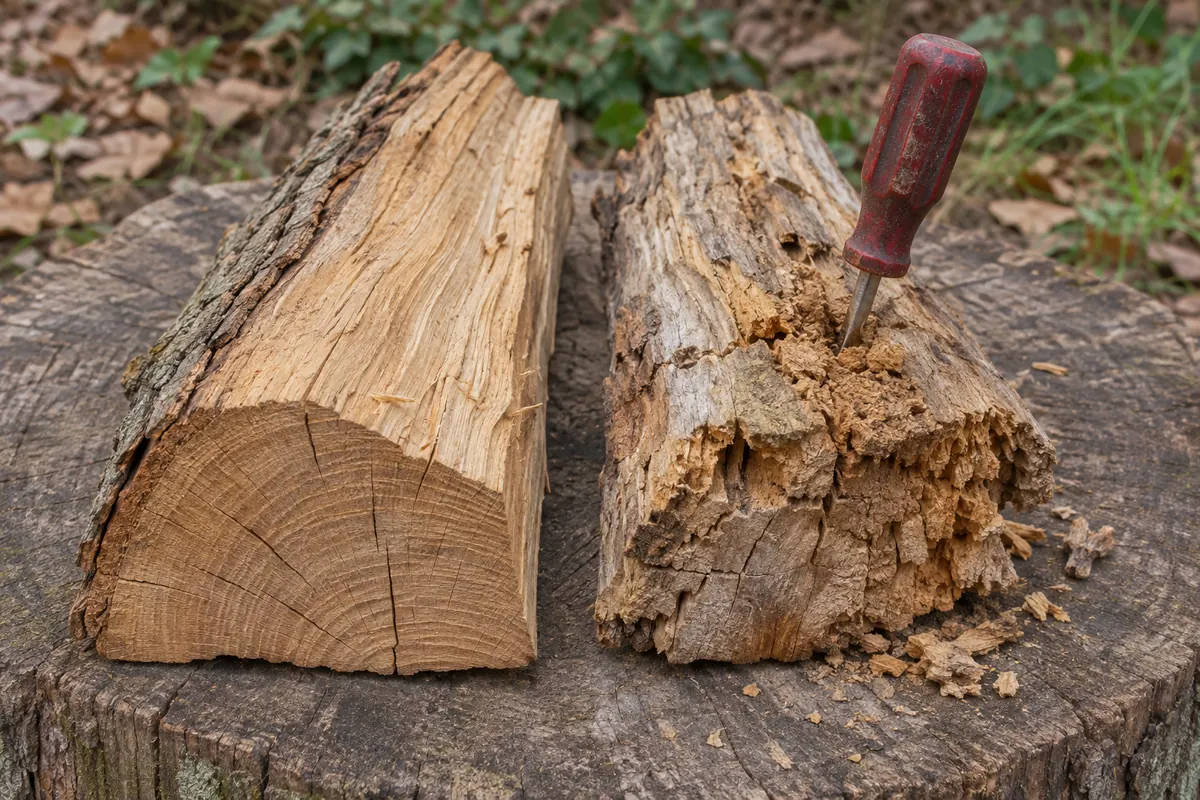
Is it still solid? Push a screwdriver into the end. If it sinks right in, the wood is rotting, not just moldy on the surface.
Is it dry inside? Split a piece and test the fresh inside face with a moisture meter. You want a reading under 20%. Over that, it isn't seasoned enough to burn, mold or not. Wet wood smokes, burns weak and builds creosote.
Is it a few pieces or the whole pile? A few spotted splits usually means a damp week. A whole pile that's fuzzy and damp means the stack is staying wet, and that's the real problem to fix.
Who's handling it? If someone has asthma, a mold allergy, or a weakened immune system, they shouldn't be the one moving or loading it.
Is It Safe to Burn Moldy Firewood? What Changes by Fire Type
Ask online and you'll get "absolutely" and "never" in the same thread. The honest answer: the risk isn't the same everywhere. Here's what changes depending on where the wood is going.
Where it's going
Light mold, dry and solid
Damp or heavy mold
Rotted
Closed wood stove or insertA sealed door sends the smoke up the chimney. Fireplace glass doors don't count.
Bring each piece inside right before it goes in the stove.
Dry it first, then check it again.
Not in the house.
Open fireplaceSmoke and loose mold can end up in the room, even with glass doors.
Keep it out. Use your cleanest wood here.
Keep it out.
Keep it out.
Outdoor fire pitThe smoke stays outside, but it reaches everyone around the fire.
The easiest place to use these pieces up. Stand upwind.
Dry it first. Wet wood just smokes.
Not worth it. Toss it.
Pizza oven, smoker or grillThe smoke lands on your food.
Don't.
Don't.
Don't.
The short version: the closer the smoke and the handling get to your living space, the more caution it takes. A closed stove is the most forgiving, an open fireplace is where we'd keep moldy wood out entirely, and cooking over it is a hard no. Use clean, dry cooking wood for that.
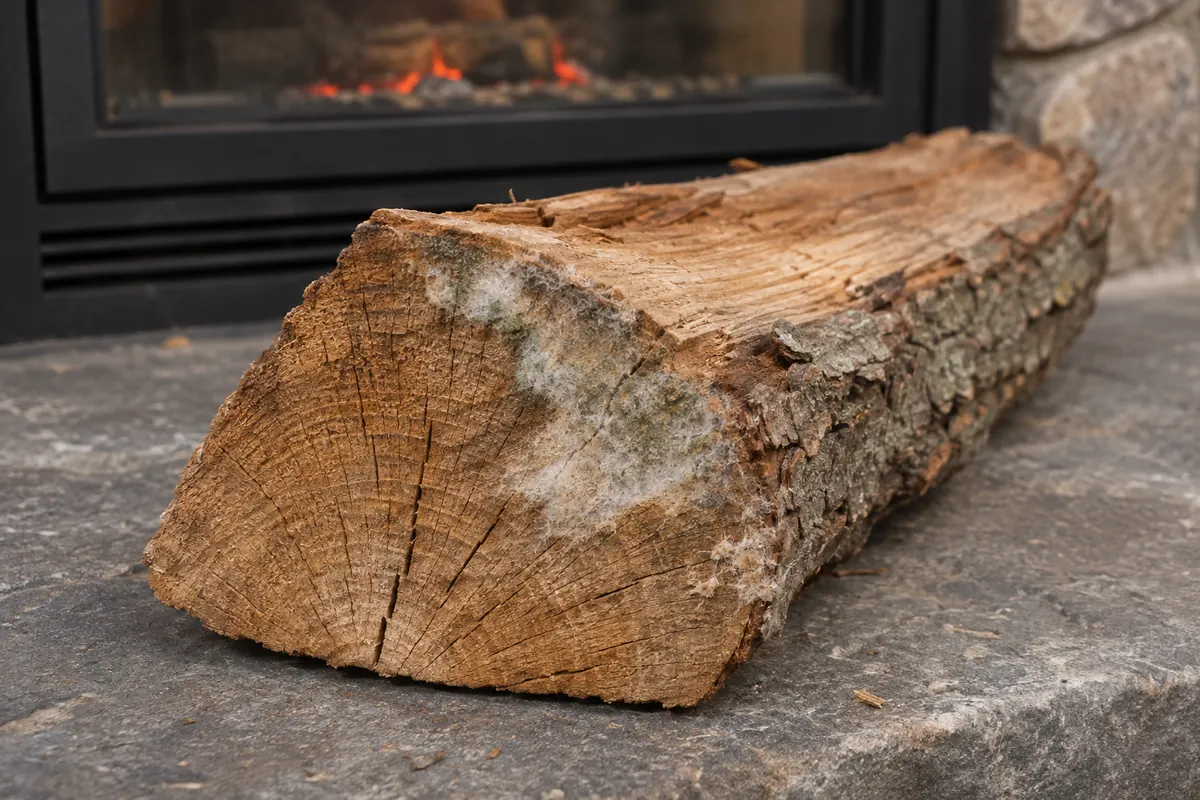
An example of a lightly moldy split. If it's going in a closed wood stove, keep it outside until you're ready to put it in the fire.
Can Moldy Firewood Make You Sick?
For most healthy people, a little mold on firewood isn't a serious threat, but handling it can still trigger symptoms. Mold can cause allergy symptoms like sneezing, a runny nose, red eyes and skin rash in sensitive people, and it can set off asthma attacks in people who are allergic to it, according to the EPA. Even dead mold can still cause a reaction. That's why carrying, stacking and loading moldy wood is where most people actually breathe it in.
If someone in your house has asthma, a mold allergy, or a weakened immune system, have someone else move the moldy wood. Everyone else: wear gloves, and if you're digging through a really moldy pile, wear a properly fitted N95 respirator and eye protection.
Gloves on, and handle moldy wood outside.
A note for Wisconsin and Great Lakes readersAround here, a fungus called Blastomyces lives in moist soil and rotting wood and leaves. It isn't the fuzz you see on a split, and infections are uncommon, but breathing in its spores when that material gets stirred up can cause a lung infection called blastomycosis, according to the Wisconsin Department of Health Services. You can't see it, so the practical step is simple: handle rotten, punky wood outside, and don't dig through the damp debris at the bottom of an old woodpile.
This is general information, not medical advice. If you have symptoms, talk to your doctor.
Can Moldy Firewood Bring Mold Into Your House?
This is the part people skip. Mold spores are everywhere outdoors already. They become a problem inside when they land somewhere damp and start growing, and wet, moldy wood in a garage, basement or wood closet gives them exactly that.
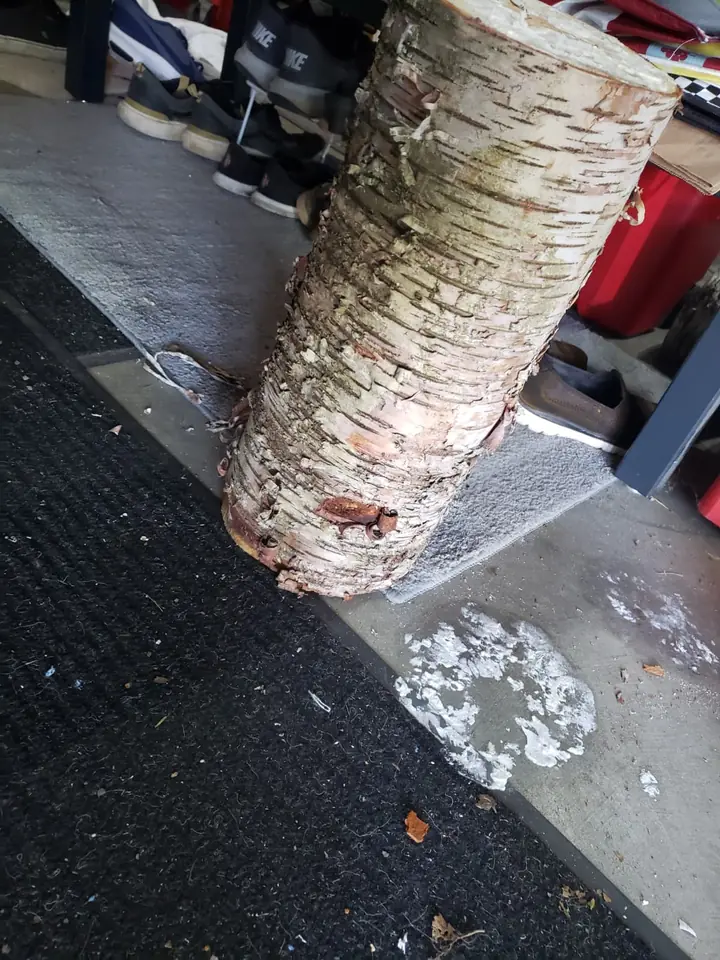
Fresh-cut green birch after one humid late-July weekend in a garage. The white mark on the concrete is where its moldy end was sitting.
We've seen how fast it happens. A few fresh-cut green birch rounds (recently cut and never seasoned or kiln dried, so still full of water) sat in a garage over one humid late-July weekend. By the end of the weekend, mold covered the cut ends and left white marks on the concrete where they sat. Nothing was wrong with the wood except that it was wet, and wet wood in a warm, closed-up space is all mold needs.
Flipped over: white mold across the cut end, and the marks it left on the floor.
Our rule is simple: moldy firewood lives outside until it's going in the fire. In practice:
Bring moldy pieces inside only when you're ready to put them in the fire.
Carry it straight from the pile to the fire. Don't let it sit by the hearth.
Never stack damp or moldy wood in a basement or wood closet.
If you keep wood in the garage, keep it dry and off the floor. Our guide on how to store firewood covers indoor storage in detail.
White, Black or Green? What's Actually on Your Firewood
Most of what people call mold on firewood falls into a handful of things you can usually tell apart by eye. One thing color won't tell you is how risky a mold is, so treat white, black and green the same way.
What you see
What it may be
What to do
White fuzz or cottony patches, mostly on cut ends
Mold
Run the four checks above, then see the fire-type table.
Black, dark green or blue-green spots
Mold
Same as white. Color doesn't tell you how risky it is.
Crusty, flaky or leafy gray-green patches on the bark
Lichen
Fine to burn. It isn't mold.
Soft green fuzz on the bark
Moss
Fine to burn once the wood is dry.
Mushrooms, shelf-like growths, or white threads under the bark
Fungus feeding on the wood
Check the wood. Solid: treat it like mold. Soft: see the next row.
Light, soft or crumbly wood (a screwdriver sinks in)
Rot
Don't burn it in the house. It's usually not worth burning at all.
Dark mold on the cut end of a green birch log. Color won't tell you how risky it is.
Still not sure what you're looking at? Run your piece through our quick checker.
Lichen vs. Mold: The Crusty Stuff on the Bark
Lichen is the flat, crusty or leafy patch on the bark, usually gray-green, pale green or yellow-orange. It looks like flaking paint or tiny leaves. Lichen doesn't feed on the wood; it just uses the bark as a place to grow. It's not mold, and it's perfectly fine to burn.
Lichen on bark. It isn't mold, and it burns off with no problem.
Which Firewood Molds Fastest?
Birch is the best example of what happens when wood isn't handled right. Its bark is naturally close to watertight, so the water stays in, and if birch logs sit too long in poor conditions they can start molding before they're ever split. We've seen it happen, which is why our wood doesn't sit that way. The kiln's heat kills that mold, and our birch never ships with mold on it. In our yard, black locust with thick, mature bark can mold heavily too, and oak, hickory and hard maple mold more readily than cherry and white ash.
Green birch in a stack. The bark holds water in, so the mold shows up on the cut ends first.
The common thread is water. Fresh-cut birch can hold nearly as much water as wood by weight, and bark that keeps it in gives mold plenty of time to grow.
Mold vs. Rot: When the Wood Has Lost Its Heat
Surface mold mostly sits on the outside of the wood. Rot is different: the fungus is eating the wood itself. Rotted wood feels light, soft or crumbly, and a screwdriver sinks right in. There's less wood left to burn, it soaks up water like a sponge, and it smokes. It isn't worth burning. Toss it.
Solid wood on the left, rot on the right. If a screwdriver sinks in, it goes in the trash, not the fire.
How to Get Rid of Mold on Firewood (and What Not to Do)
Start by fixing the moisture problem. Mold grows because the wood stayed wet, so the goal is to get it dry and keep it that way.
Split anything still in rounds. Bark holds water in. Split faces let it out.
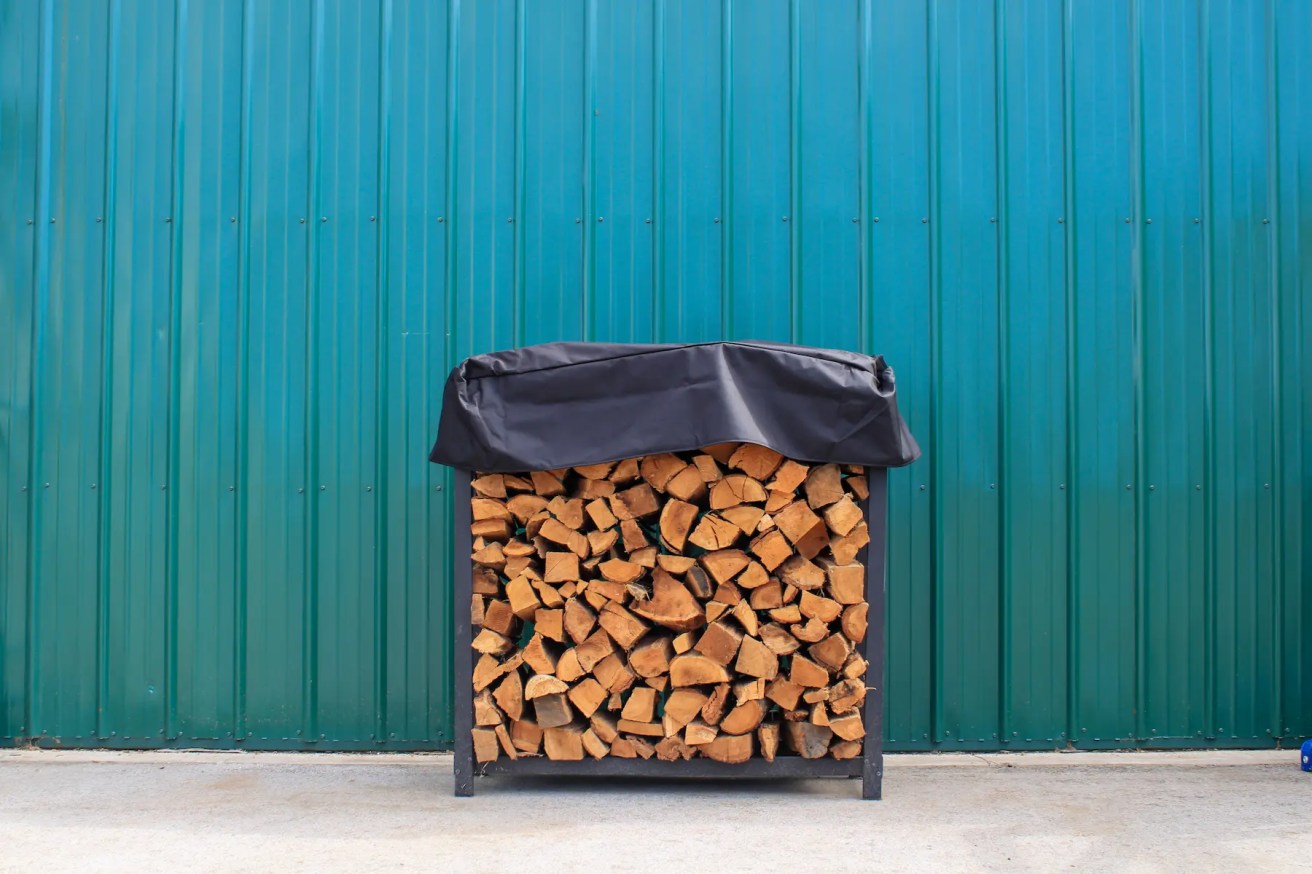
Restack it off the ground in sun and wind, covered on top with the sides open.
Pull out anything soft or crumbly and toss it.
Give it time. It takes sun and weeks of airflow, not a couple of days.
Then check it again. Drying stops new growth, but it doesn't make the old mold disappear. Run the four checks before anything goes in a fire.
What not to do: you'll see bleach recommended all over the place. Skip it, along with any mold-killing spray. As long as the wood stays wet, the mold comes right back, and you don't want chemicals on wood you're about to burn. Washing it or spraying it with vinegar has the same problem: you're adding water to wood you're trying to dry. If the pile got soaked, our guide to seasoned firewood that got rained on walks through drying it back out.
Covered on top, open on the sides. That's how a damp stack dries back out.
Does Kiln-Dried Firewood Get Moldy?
Not when it leaves our yard. Our kilns tackle mold two ways: heat kills the mold that's already there, and drying the wood down to 15% takes away the moisture new mold needs. It leaves our yard dry and visibly mold-free. Here's what that looks like inside one of our kilns:
Inside a Best Burn Firewood kilnChamber: 265°F for 24–40 hours, depending on species. Wood core: six probes drilled into the wood show 210–220°F in the second half of the cycle. For comparison, the USDA's T314-c heat-treatment standard requires 160°F at the core for 75 minutes. Airflow: 40,000 cubic feet of air a minute per kiln, about the same as 16 to 20 high-powered box fans running at once. Output: dried to 15%. USDA-APHIS compliance agreement SM-WI-1233-HT and WDATCP HT# 2019086.
The control room at the back of one of our kilns. The six plugs above the panel connect to the probes that track the temperature inside the wood.
Keep it dry after delivery, though, because kiln drying won't stop new mold if the wood gets wet again. Kiln-dried firewood can soak water back up if it's stored wrong, something we learned the hard way our first year (the story is in our guide on why kiln-dried wood can take on water again). Keep it off the ground and covered on top, and it stays the way it showed up.
How to Keep Mold Off Your Woodpile
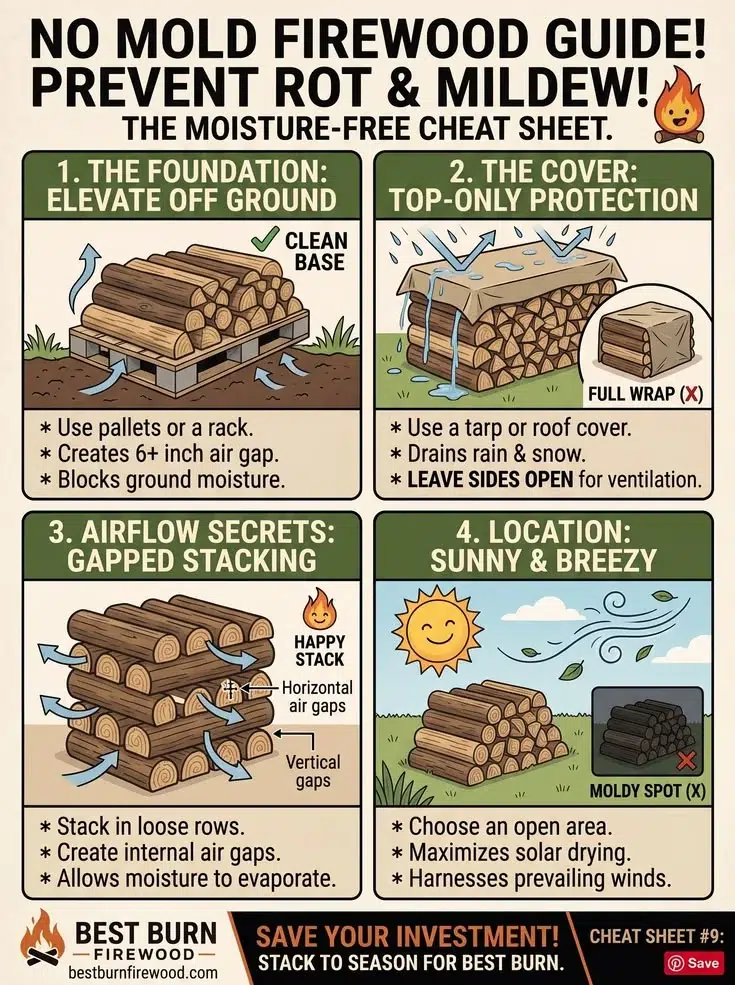
Mold needs moisture, so prevention is just keeping the pile dry. Here's the cheat sheet we give customers:
Four ways to keep mold off firewood: off the ground, top cover only, gaps for air, sun and wind.
Get it off the ground on pallets or a rack.
Cover the top only. A tarp wrapped around the whole pile traps moisture inside.
Leave gaps so air can move through the stack. Our guide on how to stack firewood shows how.
Pick a sunny, breezy spot, not the shady corner behind the garage.
Keep it outside until burn day.
For everything else, from rack placement to getting through a Wisconsin winter, see our full guide on how to store firewood.
FAQ: Mold on Firewood
Do I have to throw out the whole pile if some of it is moldy?
Usually not. A few moldy splits don't mean the whole pile is ruined. Pull out anything rotted, fix whatever is keeping the stack wet, let it dry, and check it again. If most of the pile is soft, crumbly or heavily molded, that's when it's time to replace it.
Is white mold on firewood dangerous?
White mold is a common sight on firewood, usually on the cut ends after damp weather. Color won't tell you how risky a mold is, so treat it like any other mold: make sure the wood is dry and solid, keep it outside until it's going in the fire, and don't cook over it.
Can you burn moldy wood in a fireplace?
The EPA advises against burning moldy wood, and an open fireplace is where we'd follow that most closely. Fireplaces, even with glass doors, can let smoke and loose mold into the room. Save your cleanest wood for the fireplace and keep moldy pieces out of it.
Is it safe to burn firewood with lichen on it?
Yes. Lichen is the crusty or leafy gray-green growth on bark. It isn't mold, it doesn't harm the wood, and it burns off with no problem.
Will mold spread to the rest of my woodpile?
Mold spores are already everywhere outdoors, so moisture, not the moldy piece next door, decides whether mold grows. If the whole pile is damp, the whole pile can mold. Restack it off the ground in sun and wind with a top-only cover, then check it again once it's dry.
Can you cook over moldy firewood?
No. In a pizza oven, smoker or grill, the smoke goes straight onto your food. Cook with clean, dry wood.
My firewood showed up moldy. What should I do?
Mold on a fresh delivery usually means the wood was stored wet. Split a piece and test the fresh inside face with a moisture meter, take photos, and call the seller. If it's ours, call us: we'll take it all back and replace it free.
Firewood that shows up dryKiln-dried firewood, dried down to 15%✓ Kiln-dried to 15%, so it shows up dry and clean✓ Stored on concrete under cover until it goes on the truck✓ Delivered across SE Wisconsin, from a half face cord to a full cordOrder Kiln-Dried FirewoodOutside SE Wisconsin? Find our kiln-dried hardwood bundles at Sam's Club.
Tyler Mainka is co-founder of Best Burn Firewood in New Berlin, Wisconsin, where he works directly in sourcing, processing, kiln-drying, packaging, and delivering firewood for residential and commercial customers. His writing is based on first-hand experience with wood species performance, moisture control, storage, and burn quality, including how different hardwoods behave in fireplaces, wood stoves, and outdoor fires. Tyler publishes practical guides to help customers choose the right firewood and burn it more safely, cleanly, and efficiently.