Can You Take Firewood Across State Lines? Real Fines, a 50-State Map, and Wisconsin Rules
Usually not if it’s untreated wood from home, and fines in some states run into the thousands of dollars. Check every state’s rules on our 50-state map, plus Wisconsin’s park limits and what to bring instead.
Last verified: October 13, 2026. Rules change, so we recheck this guide every few months.
Can you take firewood across state lines? Usually not if it's untreated firewood from home, and in a few places not at all. But there's no single federal law that stops you at the border. What decides it is where the wood came from, where you're taking it, and whether it's certified heat-treated.
We make certified, heat-treated firewood in New Berlin, Wisconsin, and every camping season we get the same questions from customers packing up for a trip. This guide gives you straight answers for all 50 states, with extra detail for Wisconsin trips, plus what happens if you get it wrong and what to bring instead.
Three Questions That Decide Whether Your Firewood Can Travel
Forget the state line for a second. These three questions decide almost every firewood trip:
Where did the wood come from? If it came from a county under a pest quarantine, it may not be allowed to leave that area unless it's certified. In Wisconsin, that covers most of the state, including Milwaukee and Waukesha counties.
Where is it going? State parks, national forests, other states, and private campgrounds each set their own rules. The destination has the final say.
Is it certified heat-treated? Firewood that's been certified, labeled, and kept sealed is accepted in most places that turn away firewood from home.
Not sure which rule applies to your trip? Hover over or tap any state for its rules, or switch to the Wisconsin trip checker to see what applies to your wood:
Check before you pack.This map summarizes each state's published firewood rules as of October 13, 2026. Rules change, and this isn't legal advice. Parks, campgrounds, and national forests can be stricter than state law, so the place you're going always has the final word.
Is It Illegal to Take Firewood Across State Lines?
There's no general federal law that makes it a crime to drive across a state line with firewood. The rules come from states, parks, and pest quarantines:
Some states ban untreated firewood from coming in. Several already do, including Minnesota, Illinois, New York, Pennsylvania, and Maine. Michigan joins them on January 1, 2027.
Parks and forests set distance limits. Wisconsin state parks allow untreated firewood only from within 10 miles. That rule applies no matter which state you drove from.
Pest quarantines limit where wood can leave. Spongy moth (formerly gypsy moth) is the big one in Wisconsin.
There's one federal exception worth knowing: if you're moving house out of a spongy moth quarantine area, you're required to check outdoor items, firewood included, before the move. More on that below.
The short versionUntreated firewood from home is the problem. Certified, labeled firewood, or firewood you buy where you're going, is the fix.
Where Are You Taking It? Wisconsin Destinations
If you're heading somewhere in Wisconsin, here's what each type of destination allows.
Where you're going
Can I bring untreated firewood?
What to bring instead
Wisconsin state parks, forests, and DNR campgrounds
Only if it came from within 10 miles of the property, and not from a quarantined county into one that isn't. Otherwise you'll surrender it at check-in.
Wisconsin-certified firewood (allowed from anywhere), or buy it at or near the park
Chequamegon-Nicolet National Forest
Only if it came from within 25 miles, and not from a quarantined county into one that isn't
Wisconsin-certified firewood, or buy it nearby
St. Croix National Scenic Riverway
Only if it came from within 25 miles, and not from a quarantined county into one that isn't
Certified, labeled firewood
Apostle Islands National Lakeshore
No. Firewood can't be brought from the mainland, certified or not.
Check the park's rules before you go
County, private, and tribal campgrounds
Their rules. Some ban all outside firewood, even certified.
Call ahead and ask what they sell or accept
Another Wisconsin county
Usually yes, unless you're taking it out of a spongy moth quarantine county into one that isn't
Certified firewood, or buy local
Last verified October 13, 2026. Always check with your destination before you go.
That last row trips people up. As of April 2026, 56 of Wisconsin's 72 counties are under a spongy moth quarantine, including Milwaukee, Waukesha, and Washington counties. The counties outside it are mostly in western Wisconsin. Moving untreated firewood from a quarantined county into one of those is illegal, even if you're taking it to land you own.
One thing that's no longer a rule: Wisconsin ended its emerald ash borer quarantine in 2023, two years after the federal one ended. The beetle is still spreading, though, which is why ash firewood is still worth keeping close to home.
Taking Firewood From Wisconsin to Another State
Heading out of state? Here's how our neighbors handle firewood coming in from Wisconsin.
State
Can I bring untreated firewood?
What to do instead
Minnesota
No. Hardwood firewood from other states needs state approval to come in.
Leave it home and buy firewood in Minnesota
Michigan
Not starting January 1, 2027. Some national parks, forests, and lakeshores there already ban it.
Certified firewood with a state or USDA seal, or buy it there
Illinois
No
Firewood heat-treated in a certified kiln and labeled, or buy it there. Illinois only counts wood as certified if it was heat-treated.
Iowa
No statewide ban, but parks ask you to leave it home
Buy local and ask the park first
Going farther? Check the state map at the top of this guide, or the Don't Move Firewood map, which links to each state's agency.
What Happens If You Get Caught With Firewood?
Most of the time, you lose the wood. Wisconsin state parks have you surrender it before you check in, and other places will confiscate it or make you burn it on the spot. But fines are real, and some are steep:
Where
Penalty
Wisconsin state parks and forests
You surrender the wood at check-in
Chequamegon-Nicolet National Forest
Up to $5,000 and up to 6 months in jail
Minnesota
Up to $7,500 per day, per incident
Michigan (starting 2028)
A warning letter first, then $1,000 to $10,000 for repeat violations. 2027 is an education year.
New York
$250 fine plus a $100 civil penalty, and up to 15 days in jail
Connecticut
A warning the first time if you say where the wood came from, then $85
Maine
$100 to $1,000 per day
Washington
Up to $5,000 per violation
Pennsylvania
A fine up to $300, a civil penalty up to $20,000, or both
Maximum penalties as listed by each agency. Last verified October 13, 2026.
How to Spot Firewood That's Safe to Move
Certified heat-treated firewood is the easy way around almost all of this. It's been heated to at least 140°F all the way through for a full hour, which kills insects and diseases hiding inside, and a state agency or the USDA certifies the process. A few states set the bar higher: New York, Pennsylvania, Maine, Vermont, and Tennessee require 160°F for 75 minutes. If you're headed to one of them, check that the label says so.
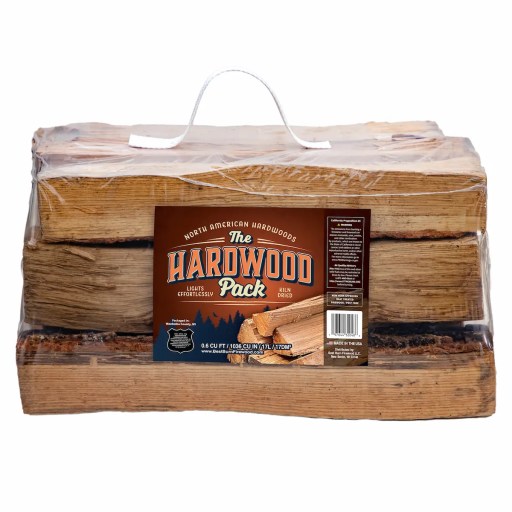
Our Hardwood Pack, sold at Kwik Trip in SE Wisconsin and at Sam's Club locations nationwide. The USDA shield sits lower left; the heat-treated line sits on the right.
On the bag, look for three things:
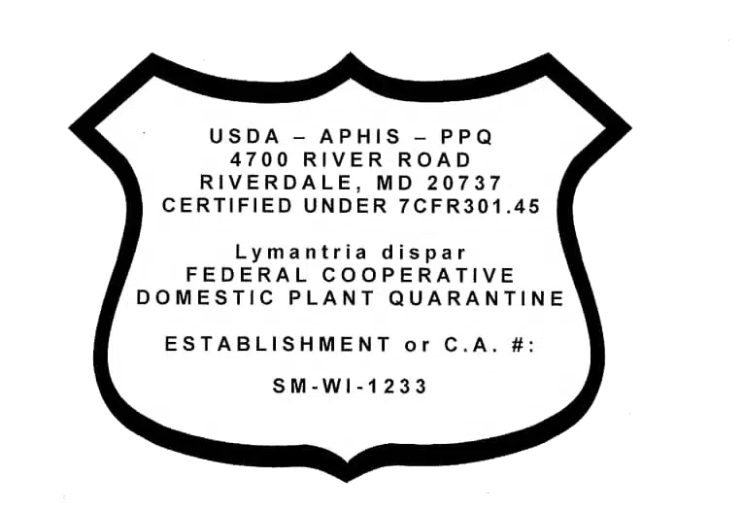
A USDA shield or a state certification seal. This is the proof. No seal, no certification.
The words "heat treated." Not just "kiln dried." Kiln dried has no legal definition, so it doesn't tell a ranger anything about pests. (Ours is both, but the heat treatment is what counts at the gate.)
Who made it. Certified labels name the producer, so the wood can be traced.
The USDA shield. Every certified producer's shield looks like this one; only the number at the bottom changes, and it identifies who made the wood.
Then keep the bundle sealed until you get there, and hang on to the label and your receipt. In Minnesota, for example, certified bundles have to stay unopened to leave a quarantine area.
What we see at the campground gateCustomers ask us for a copy of our heat-treatment certification letter all the time, to show at check-in. We haven't heard of a customer being turned away with our certified bundles, except at campgrounds that don't allow any outside firewood at all. The turn-away stories we hear are almost always about loose, untreated wood from home. If you're bringing loose certified wood instead of sealed bundles, ask the seller for a receipt and a copy of their certification, and call the campground first.
Want to know more about how the drying side works? Here's our explainer on kiln-dried firewood.
How Far Is Too Far to Move Firewood?
Distance limits depend on where you're going:
Distance limit
Where it applies
10 miles
Wisconsin state parks, forests, and DNR campgrounds
25 miles
Chequamegon-Nicolet National Forest and the St. Croix Riverway
50 miles
Illinois state parks, and New York (for firewood cut in New York)
No rule where you're going? The general rule of thumb from the Don't Move Firewood campaign is that 10 miles or less is best and 50 miles is too far.
Already Moved It? Here's What to Do
It happens. If you've already hauled firewood farther than you should have, burn all of it at your destination, and do it soon. Rake up the bark and wood chips it left behind and burn those too. Don't bring leftovers home, and don't take them to your next stop. Bugs can crawl out of wood that sits around.
Moving House With a Woodpile
If you're moving out of a spongy moth quarantine area, which includes most of Wisconsin, federal rules require you to check your outdoor items for egg masses before the move. Firewood is on USDA's self-inspection checklist, with a note to move only certified, labeled wood.
The easy answer: don't move the woodpile. Burn it before you go, give it to a neighbor, or leave it for the new owners.
Why These Rules Exist
Tree-killing insects and diseases can only travel a few miles on their own. Riding in a trunk full of firewood, they can travel hundreds of miles in a day. Some can survive inside firewood for more than three years, and the eggs are often too small to see.
How common is this? When New Hampshire's forestry division surveyed campers coming from out of state, it found over 40% had brought firewood from home, and the wood they confiscated averaged 35 insects per stick.
Common Firewood Myths
"It's a federal crime to cross a state line with firewood." There's no general federal law like that. The rules come from states, parks, and pest quarantines.
"A year of seasoning kills the bugs." It doesn't. Seasoning wood at home isn't a recognized pest treatment. While seasoned firewood burns better than unseasoned firewood, it isn't pest-free.
"The emerald ash borer quarantine is still in effect." Not anymore. The federal quarantine ended in 2021, and Wisconsin's ended in 2023.
"Wisconsin bans moving firewood across county lines." Only out of spongy moth quarantine counties into ones that aren't quarantined.
"Kiln dried means it's certified." Not on its own. Look for the seal and the words "heat treated."
Before You Pack: A Quick Checklist
Check the rule at your destination, or call ahead.
Buy firewood where you'll burn it, or bring certified, labeled firewood.
Keep certified bundles sealed until you arrive.
Keep the label and your receipt handy for check-in.
Burn what you bring. Don't take leftovers home.
FAQ: Taking Firewood Across State Lines
Can you bring firewood across state lines?
There's no general federal ban, but many states and parks restrict it. Minnesota, Illinois, New York, Pennsylvania, Maine, and several other states don't allow untreated firewood from other states, and Michigan joins them on January 1, 2027. Certified, labeled firewood is accepted in most places.
How far can you travel with firewood in Wisconsin?
For Wisconsin state parks, forests, and DNR campgrounds, untreated firewood must come from within 10 miles. The Chequamegon-Nicolet National Forest allows 25 miles. Wisconsin-certified firewood can come from anywhere.
Can I bring firewood from home to a Wisconsin state park?
Only if your home is within 10 miles of the park, and you're not moving it from a spongy moth quarantine county into one outside the quarantine. Otherwise you'll be asked to surrender it at check-in. Certified firewood is allowed from any distance, and firewood is for sale in or near almost every Wisconsin state park.
Can I take firewood across county lines in Wisconsin?
Usually, yes. The exception is moving untreated firewood out of one of Wisconsin's 56 spongy moth quarantine counties into a county that isn't quarantined. That's illegal, even if you're taking it to your own property.
Is kiln-dried firewood allowed at state parks?
Only if it's also certified. "Kiln dried" alone has no legal definition. Look for a USDA shield or state certification seal and the words "heat treated" on the label.
What happens if I get caught with firewood?
Most often, you lose the wood. Fines also apply in many places: up to $5,000 in the Chequamegon-Nicolet National Forest, up to $7,500 per day in Minnesota, $250 plus a $100 civil penalty in New York, and a civil penalty of up to $20,000 in Pennsylvania.
Can I bring firewood to Michigan or Minnesota?
Leave untreated firewood home for both. Minnesota requires state approval for hardwood firewood from other states. Starting January 1, 2027, Michigan only allows heat-treated firewood certified by a state agriculture department or the USDA.
Buy it where you burn itCertified firewood that's ready for the trip✓ Heat-treated and certified, with the USDA shield on every bundle✓ Sealed and labeled, so it's easy to show at check-in✓ Sold at Kwik Trip across SE Wisconsin and at Sam's Club locations nationwideShop Certified BundlesFind It at Sam's ClubRun a campground or store? Stock certified bundles for your customers.
Sources (last verified October 13, 2026)Rules change, this isn't legal advice, and the place you're going has the final word.
Tyler Mainka is co-founder of Best Burn Firewood in New Berlin, Wisconsin, where he works directly in sourcing, processing, kiln-drying, packaging, and delivering firewood for residential and commercial customers. His writing is based on first-hand experience with wood species performance, moisture control, storage, and burn quality, including how different hardwoods behave in fireplaces, wood stoves, and outdoor fires. Tyler publishes practical guides to help customers choose the right firewood and burn it more safely, cleanly, and efficiently.
can you transport firewood across state linesdont move firewoodfirewood across state linesfirewood finesmoving firewoodmoving firewood across state linesshipping firewoodtransporting firewood