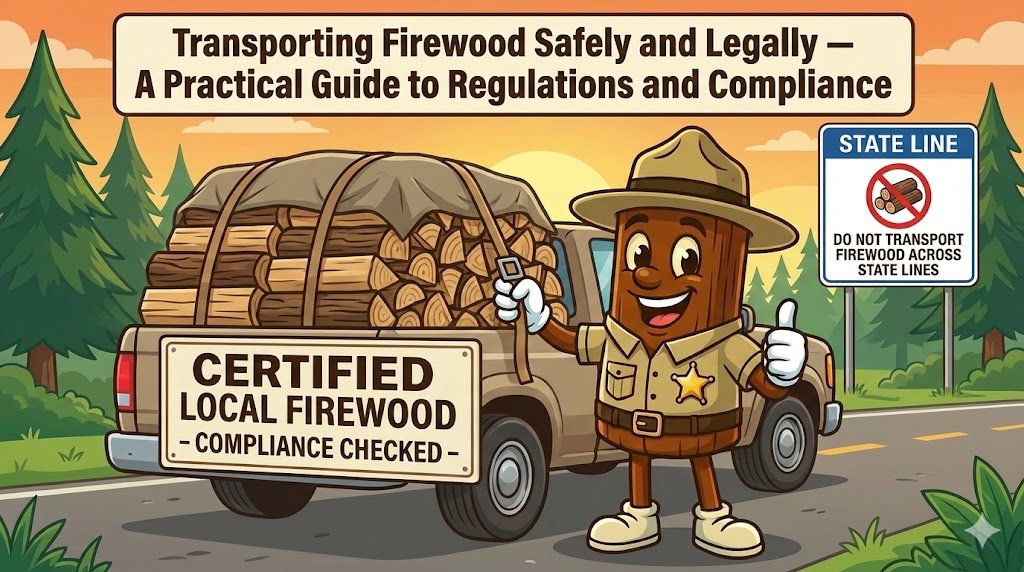
Moving firewood the right way matters. It stops invasive pests, keeps you within state rules, and protects the places you love. This guide walks you through what to know: which firewood types are certified, key state rules, required paperwork, safe handling and storage, and how Best Burn Firewood can help you stay compliant. Many homeowners don’t realize the legal and environmental risks of transporting untreated wood — learn the rules so you can protect your property and enjoy your fire with confidence.
Transport rules are designed to block invasive pests that can do serious ecological and economic harm. By limiting the movement of potentially infested wood, these regulations help protect local forests and the wildlife that depend on them. Pests like the Emerald Ash Borer, Oak Wilt and the Spongy Moth (formerly known as Gypsy Moth) have devastated tree populations, reduced biodiversity, and driven up management costs.
Research shows that public awareness is a key factor in stopping the spread of pests through firewood.
Preventing invasive pests — why awareness matters
Invasive forest pests are harming North American forests, and moving infested firewood speeds that spread. A study assessing public knowledge, attitudes, and perceptions about forest health found general awareness was low. The authors concluded that raising awareness — with clear, targeted messaging — is vital for changing how people move firewood and reducing risky behavior.
Achieving effective outreach for invasive species: firewood case studies from 2005 to 2016, SL Rodriguez, 2005
Pests and their eggs can ride inside logs and firewood. When that wood is moved long distances, it can introduce those pests to new areas where they can establish and multiply. The Emerald Ash Borer and dutch elm disease, for example, has moved quickly across the U.S. in part because of untreated firewood being transported between regions. That’s why many regulations limit moving wood from known infested locations.
Pest outbreaks can kill native trees, change forest structure, and alter wildlife habitat. The cost of managing infestations — removing dead trees, replanting, and treating affected areas — can run into the millions. The spread of the Spongy Moth has already caused large-scale defoliation and millions of dollars in damage in both forested and urban areas, underlining why compliance matters for both the environment and the wallet.
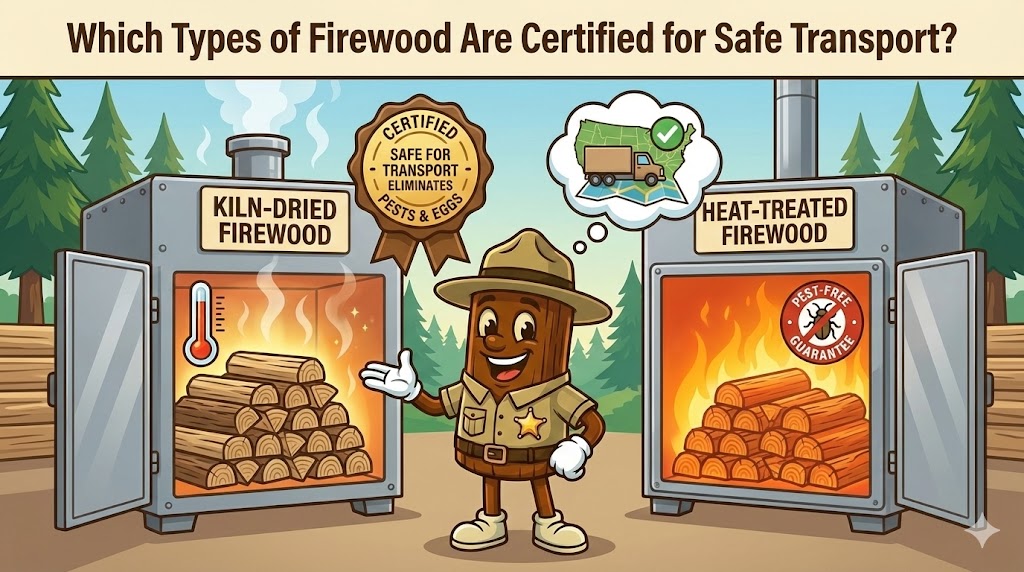
Firewood that’s safe to move is usually kiln‑dried or heat‑treated. Those drying processes reduce moisture, improve burning, and — most importantly — eliminate pests and eggs so the wood can be transported across regions without spreading invasive species.
Kiln‑dried firewood is dried in a controlled chamber until moisture content is low (typically below 20%). That makes it burn better and helps kill pests. Heat‑treated firewood is exposed to a specific temperature for a set time to ensure pest eradication. Both methods are widely accepted for meeting transport standards and reducing the risk of spreading invasive organisms.
Some states set exact heat‑treatment rules for commercial firewood — Oregon is one example.
Oregon firewood heat‑treatment rules for commercial transport
As of 2012, any commercially produced firewood sold in Oregon that originates outside Oregon, Washington, or Idaho must be heat‑treated for at least 60 minutes at 60°C (140°F).
The Hidden Threat in Firewood: Invasive Forest Pests, DC Shaw, 2012
Certified wood is processed to kill insects, larvae, and eggs before it leaves the supplier. Using kiln‑dried or heat‑treated firewood greatly lowers the chance of introducing pests to new areas. Following certification standards protects local ecosystems and helps homeowners avoid fines or other penalties tied to transporting firewood and untreated wood.

Laws vary by state and are tailored to local pest threats. If you plan to move firewood across county or state lines, check the rules that apply where you live and where you’re headed.
Wisconsin enforces quarantines on certain counties and limits moving firewood from those areas into non‑quarantined zones. In some cases, movement is restricted to within 10 miles of the wood’s source. Ignoring these rules can lead to fines and other penalties.
Illinois, Minnesota, and New York each use a mix of sourcing rules and quarantines to control transporting firewood movement. Illinois often requires firewood to be sourced in‑state or certified pest‑free. Minnesota restricts transport of untreated wood from quarantined areas. New York maintains quarantine zones and specific movement limits to slow pest spread. Homeowners should review the exact regulations for the state involved before transporting firewood.
Shipping firewood overseas is a specialized endeavor that requires careful planning and adherence to strict regulations. Due to concerns about pests and diseases that can be transported via wood products, many countries enforce stringent phytosanitary laws. Before shipping, individuals or companies must ensure the firewood is treated and certified according to the importing country's requirements. Once these measures are taken, appropriate documentation, including a phytosanitary certificate, must be prepared to accompany the shipment.
After meeting the necessary legal requirements, the logistics of packaging and transporting firewood become paramount. Firewood is typically bundled or palletized to minimize damage during transit and facilitate easy loading and unloading from a shipping container. Depending on the volume, shipping options can range from standard freight services to specialized carriers, both usually utilize shipping container providers. Additionally, factors such as logistics costs, shipping duration, and the destination port's accessibility play critical roles in determining the most efficient transportation method.
Many jurisdictions require paperwork to prove where transporting firewood came from and how it was treated. Knowing which documents to get and how to use them prevents problems during transport.
Permits or certificates of origin confirm your firewood’s source and treatment status. Suppliers usually provide these documents, or you can request them from your local agricultural or natural resources agency. Keep any certificates with the load while transporting to show compliance if asked.
Interstate movement often triggers additional rules and introduces USDA requirements due to federal travel — some states require specific permits, certifications, or labels. Always check the regulations for both the origin and destination states before you travel. Failure to comply can result in fines or confiscation of the wood.

Good handling and storage reduce pest risk and keep your wood ready to burn. Follow these practical steps to keep firewood dry, pest‑free, and safe to move.
Store firewood in a dry, elevated spot to avoid moisture and pests. Stack wood off the ground, cover the top (not the sides) with a tarp, and keep the pile at least 30 feet from buildings and mature trees when possible — this lowers pest transfer risk and reduces fire hazards.
Lift with your legs and keep your back straight to prevent injury. Secure wood in your truck or trailer so it won’t shift during travel. Cover the load to protect it from rain and snow, and always follow local transport rules to avoid fines or spreading pests.

Best Burn Firewood supplies certified kiln‑dried products that meet many state requirements for safe transport. Choosing certified wood makes it easier to follow regulations and lowers the chance of moving pests between regions.
Our firewood is USDA and WDATCP certified, meaning it’s been processed to industry standards to eliminate pests and pathogens. That certification gives you confidence the wood meets safety and quality expectations for transporting firewood across state lines and use.
You can order certified firewood from Best Burn Firewood through our website or buy from authorized local distributors. Always ask for certification or a certificate of origin when purchasing to confirm the wood meets transport rules for your destination.
Moving untreated firewood can lead to fines, confiscation of the wood, and other penalties. More importantly, it risks introducing pests that cause long‑term damage to forests and urban trees — costs that fall on homeowners, municipalities, and land managers.
Certified firewood usually comes with labels or paperwork stating it’s kiln‑dried or heat‑treated. Reputable suppliers will provide a certificate of origin or treatment. If you’re unsure, ask the seller for documentation before you buy.
Yes. Store wood off the ground in a dry, ventilated location, and cover the top to keep rain off. Keeping wood at least 30 feet from structures and trees reduces pest transfer and lowers fire risk.
If you think your firewood is infested, don’t move it. Isolate the pile away from other wood and buildings, then contact your local agricultural department or an extension office for next steps. They can advise on treatment or safe disposal to prevent spread.
Generally no — many states require permits, certifications, or specific labeling for interstate movement. Check rules for both the origin and destination states before transporting firewood across state lines to avoid fines or seizure.
Secure the load so wood won’t shift, use proper lifting techniques, and cover the wood to keep it dry. Confirm that the firewood is certified or permitted for travel to your destination, and carry any required documentation with you.
Some of the most common afflictions currently affecting trees include the infamous Dutch elm disease, which is caused by a fungus spread by bark beetles. This devastating disease primarily targets elm trees, leading to rapid wilting and death if not addressed promptly. Another noteworthy threat is the emerald ash borer, a small but destructive beetle native to Asia that has wreaked havoc on ash tree populations across North America. The larvae of this pest burrow into the tree’s bark, disrupting its nutrient flow and often resulting in tree mortality within a few years after infestation. Other honorable mentions include the oak wilt which is a deadly fungus disease throughout oak trees in Wisconsin.

DontMoveFirewood.org is a nationwide public awareness initiative focused on preventing the spread of invasive insects through transported firewood. Pests like the Emerald Ash Borer can hide inside untreated wood and be unknowingly moved across state lines, causing serious damage to forests and local ecosystems.
The site offers clear, state-by-state guidance, quarantine information, and best practices for safe firewood sourcing, all centered on one simple rule: buy firewood where you burn it. This guidance applies nationwide—not just in Wisconsin—and helps individuals and businesses reduce the risk of spreading invasive species.
Knowing the rules around firewood transport protects forests, neighborhoods, and your wallet. Using certified kiln‑dried or heat‑treated firewood, following state regulations, and storing and handling wood properly are simple steps that make a big difference. Browse our very own certified firewood products to keep your next fire safe, legal, and worry‑free.