Pecan Wood for Smoking: Flavor Profile, Meat Pairings, and How It Burns
Pecan wood for smoking delivers a sweet, nutty flavor that sits right between fruitwoods and hickory on the intensity scale. It burns hot, produces solid coals, and holds up across a wide range of proteins without overpowering them. Here is everything you need to know about how it performs, which meats it works best on, and how it stacks up against hickory.
Tyler M
9 min read
Last Updated:
April 26, 2026
Pecan wood for smoking delivers a sweet, nutty flavor that sits right between fruitwoods and hickory on the intensity scale. It burns hot, produces solid coals, and holds up across a wide range of proteins without overpowering them. Here is everything you need to know about how it performs, which meats it works best on, and how it stacks up against hickory.
Pecan is one of those smoking woods that serious pitmasters keep coming back to. Pecan wood for smoking is great, since it sits right in the middle of the flavor spectrum: sweeter and more forgiving than hickory, with noticeably more presence than apple or cherry. For long cooks especially, that balance is hard to beat.
If you landed here wondering whether pecan is worth tracking down for your smoker, the short answer is yes. This guide covers how it burns, what it does to different cuts, how it stacks up against hickory, and what you should know about sourcing it.
What Is Pecan Wood?
Pecan (Carya illinoinensis) is a member of the hickory family. Both trees are in the Carya genus, which is why their wood behaves so similarly in a fire. Pecan grows natively through the American South and Southwest, particularly in Oklahoma, Texas, Louisiana, and Georgia. It is a nut-bearing tree, which is where some of the confusion about flavor comes from.
Smoking with pecan does not make your meat taste like pecans. The smoke flavor comes from the wood's chemistry during combustion, not the nut. What you get is something cleaner and more subtle than that, but we will get to that in a moment.
Pecan Wood Smoke Flavor Profile
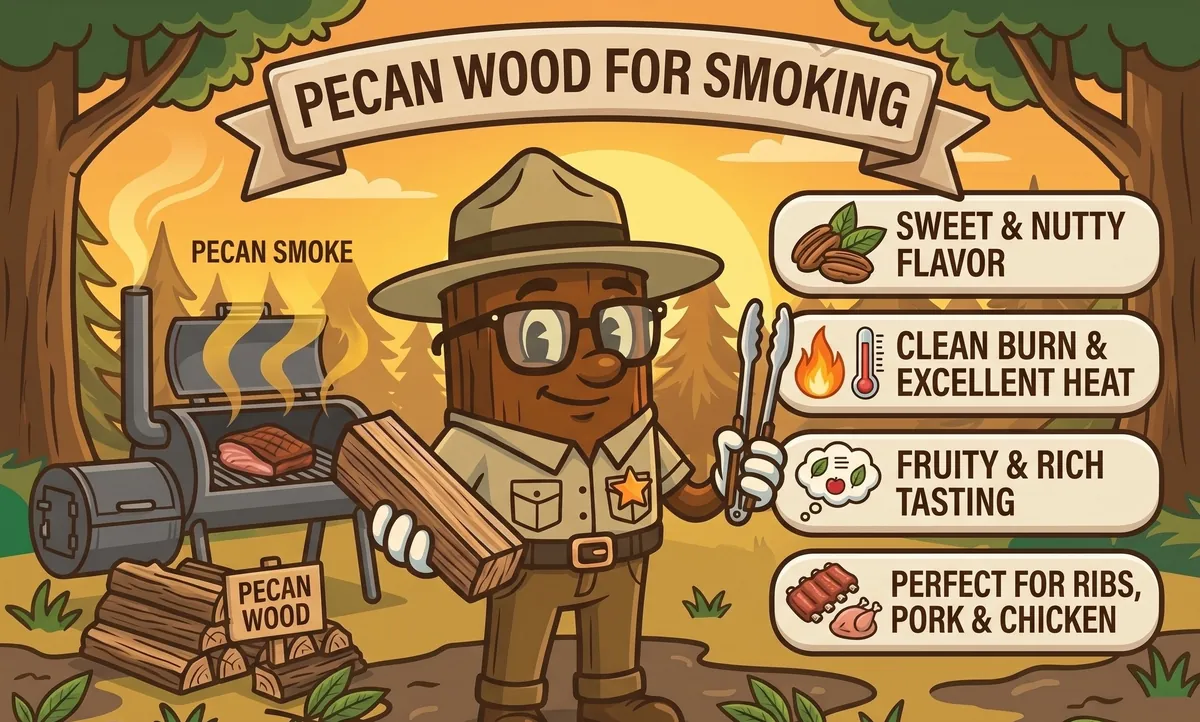
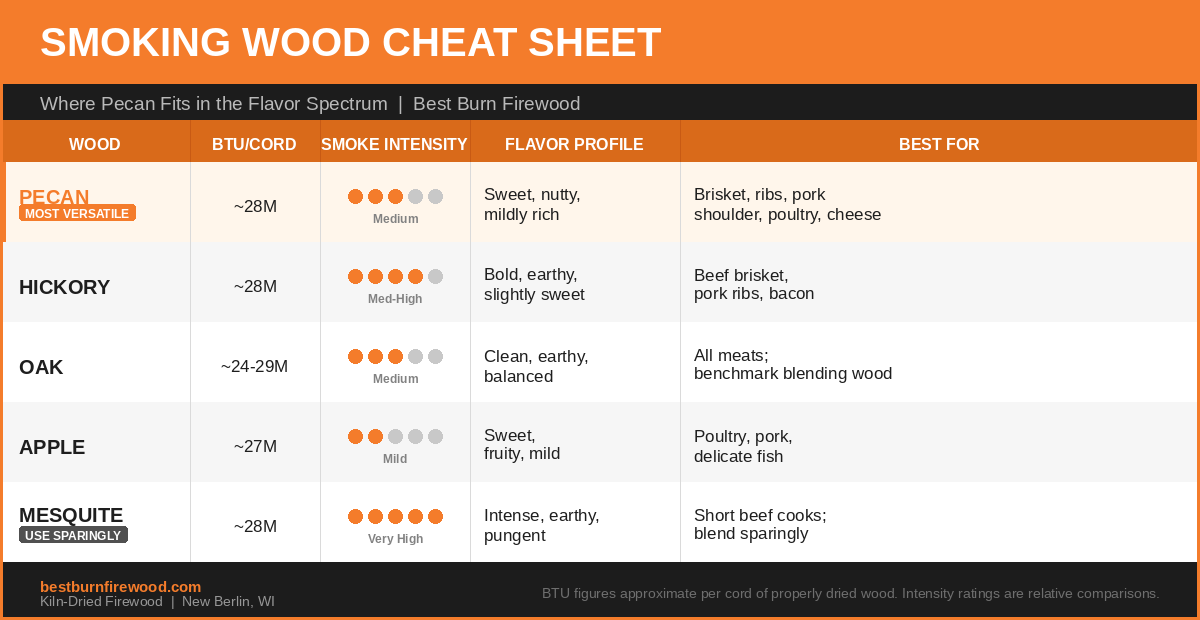
The honest description is sweet, nutty, and mildly rich. It is stronger than fruitwoods and measurably milder than hickory. That middle-ground character is what makes it so useful across different proteins and cooking styles.
One thing worth clearing up before you buy: pecan has picked up a reputation in certain BBQ circles as a "cool burning" wood. That is not accurate. It burns hot, produces good coals, and behaves exactly the way you would expect from a dense hardwood. The "cool" label likely came from someone comparing it to full-strength hickory or mesquite and noting the milder smoke output, not the heat output.
On long cooks, hickory can occasionally push toward bitter if you are running too much smoke. Pecan almost never does. That forgiveness is a real practical advantage, especially if you are cooking a mix of things at once or dialing in a new setup.
Best Meats to Smoke with Pecan Wood
Pecan wood for smoking is genuinely versatile, but it is not the right call for everything. Here is an honest breakdown by protein.
Brisket: One of pecan's best applications. The sweet-nutty smoke builds well over a long cook and stays in the background rather than dominating. It works beautifully on its own or blended with oak for a more layered result. This is a common pairing in Texas BBQ for good reason.
Pork ribs and shoulder: This is probably the most natural pairing in the whole list. The sweetness in pecan smoke complements pork fat well, and the long cook times give the smoke character time to develop. If you have never tried it on a pork shoulder, it is worth a cook.
Poultry: Chicken and turkey both do well with pecan. It is assertive enough to actually flavor the meat but forgiving enough that it will not overpower a bird the way hickory can on a shorter cook. Holiday turkeys smoked with pecan are a Southern tradition for a reason.
Cheese: Cold smoking cheese with pecan works well. The smoke is steady and interesting without being aggressive, and the flavor profile adds something to aged cheddar, gouda, and similar cheeses without turning them into something unrecognizable.
Fish: Use caution here. For delicate fish like trout or tilapia, pecan can be a little much. Apple or cherry are safer choices for most fish. Salmon can handle pecan if you keep the smoke exposure short and the temperature controlled.
Pecan vs Hickory: What's the Real Difference?
Since both are Carya hardwoods, they share more in common than most comparisons acknowledge. The BTU output is similar (roughly 28 million per cord when properly dried), the coal quality is comparable, and both season down to solid cooking wood given enough time.
The difference is in the smoke itself. Hickory is bolder and more assertive. It is what you reach for when you want the smoke to be a main character in the flavor, like a classic smoked pork belly or a heavy beef rib. Pecan is more nuanced. It delivers smoke presence without smoke dominance, which is why it tends to work better across a wider range of proteins.
Neither wood is better across the board. If you have cooked with hickory and found it occasionally too much, pecan is worth trying. If hickory has never been a problem for you, pecan just gives you a different flavor profile to work with.
We carry kiln-dried hickory firewood here at Best Burn Firewood. As pecan's closest relative in the Carya family, it is the best available substitute if you are cooking now and cannot source pecan. To see how oak fits into the picture as the benchmark blending wood, check out our oak firewood guide.
Is Pecan Good Firewood?
If you found this page wondering about pecan for home heating rather than cooking, it is a solid choice. The BTU output lands around 28 million per cord when properly dried, which puts it in the same tier as white oak and hickory. It burns clean, produces good coals, and handles extended fires without needing constant reloading. Pecan wood for smoking is priced accordingly. Because demand is driven almost entirely by BBQ and cooking rather than home heating, it tends to cost more per cord than oak or hickory in markets where it is available. If your goal is pure heat output, hickory gives you the same BTU at a lower price point.
The main thing to know is moisture. Green pecan comes in around 24% moisture content, which is on the higher end for a hardwood. It dries well, but it needs time: plan on 9 to 12 months minimum if you are air-seasoning it, stacked off the ground with good airflow and a top cover. Kiln drying brings it down well under 15% in a controlled 24 to 32 hour cycle at 265 degrees F, which means it is ready to burn hot and clean from day one.
Pecan Wood Availability and What to Know Before You Buy
Pecan does not grow in Wisconsin or most of the Upper Midwest. If you are in this region and you have pecan wood on hand, it came from a tree removal or someone hauled it up from further south. For the majority of Wisconsin buyers, it has to be sourced intentionally.
We are working on bringing in Texas-sourced pecan this summer alongside mesquite, pinon, and post oak. When that supply is available, we will update this page with pricing and ordering details. In the meantime, our kiln-dried hickory is the closest equivalent we carry in terms of BTU output, coal quality, and smoke character.
If you are working on a wood-fired cooking setup and want a broader look at which woods we recommend for different applications, our cooking firewood guide covers species selection for pizza ovens, grilling, and smoking in one place. We also have a dedicated guide to wood for pizza ovens if that is your specific setup.
Best Burn Firewood supplies wood-fired BBQ restaurants across SE Wisconsin, including Smoke Shack in Milwaukee. All of our hardwoods are kiln-dried at 265 degrees F for 24 to 32 hours and certified by the USDA and Wisconsin Department of Agriculture (WDATCP HT# 2019086). If you have questions about what wood fits your setup, reach out and we will point you in the right direction.
Frequently Asked Questions About Pecan Wood for Smoking
Is pecan wood good for smoking?
Yes. Pecan is one of the most versatile smoking woods available. Its sweet, nutty smoke sits between fruitwoods and hickory on the intensity scale, which makes it a reliable choice for brisket, pork, poultry, and even cheese. It is forgiving on long cooks and rarely turns bitter the way hickory occasionally can.
What does pecan wood smoke taste like?
Sweet, nutty, and mildly rich. It is stronger and more complex than apple or cherry but noticeably milder than hickory. Despite common misconceptions, smoking with pecan does not make your meat taste like pecans. The flavor is a clean, warm smokiness with a slightly sweet finish.
Can you blend pecan with other smoking woods?
Yes, and it blends well. Pecan and oak is a classic combination for brisket: the oak provides a clean, neutral base and the pecan adds sweetness and depth. Pecan and cherry works well for poultry, where both woods contribute mild, complementary flavors. Blending with hickory gives you more intensity while keeping some of pecan's sweetness in the profile.
How long does pecan firewood need to season?
Green pecan comes in around 24% moisture, so air-seasoning it takes 9 to 12 months at minimum. Stack it off the ground, split it before storing, cover the top but leave the sides open for airflow, and let it go. Kiln-dried pecan reaches below 15% moisture in a 24 to 32 hour cycle at 265 degrees F and is ready to use immediately.
Is pecan stronger than hickory for smoking?
No. Pecan is milder than hickory. Both are in the same genus (Carya) and have similar BTU output, but hickory produces a bolder, more assertive smoke. Pecan is the better choice when you want smoke presence without smoke dominance, particularly on delicate proteins like poultry or on mixed cooks where the smoke needs to be balanced across different cuts.
Tyler M is the Co-Founder of Best Burn Firewood in Wisconsin, where he works directly in sourcing, processing, kiln-drying, packaging, and delivering firewood for residential and commercial customers. His writing is based on first-hand experience with wood species performance, moisture control, storage, and burn quality, including how different hardwoods behave in fireplaces, wood stoves, and outdoor fires. Tyler publishes practical guides to help customers choose the right firewood and burn it more safely, cleanly, and efficiently.
bbq with pecancooking with pecanpecanpecan firewoodpecan meatspecan smoking woodpecan wood
Related Blog Posts
Best Firewood for Pizza Ovens: Heat Control + Coal Management
Kiln-dried oak is the best wood for a pizza oven, but species choice is only half the equation. Heat control and coal management are what actually separate a perfect crust from an inconsistent one. Here is what Wisconsin's top wood-fired restaurants use, and how they do it.
Is Oak Good Firewood? Heat Output, Burn Time & Seasoning Tips
Oak is the go-to firewood for overnight burns and serious home heating — but it carries more moisture than almost any other hardwood, and red oak and white oak don't perform the same. We break down BTU by species, what it actually takes to dry oak properly, real kiln data from our operation, and why restaurants request oak more than any other species.
Is Maple Good Firewood? Heat Output, Burn Time & What to Expect
Maple is one of the most common firewood species in Wisconsin — but sugar maple and silver maple perform very differently. We break down the real BTU numbers by species, how maple burns, seasoning vs kiln-dried, and where maple fits in a mixed hardwood load.
Is Birch Good Firewood? Heat Output, Burn Time, What to Expect
Birch is good firewood for fireplaces and wood stoves, offering high heat and a steady burn. Learn heat output, burn time, and how birch compares to hardwoods.
Safely Transporting Firewood: Key Rules You Must Know
Have you ever considered the type of firewood you use for your fireplace or grill? The quality of your firewood can significantly impact your fire experience, whether it’s the ease of lighting the fire, the longevity and intensity of the burn, or even the aroma produced. Enter kiln-dried firewood, a premium firewood option that guarantees an optimal burn experience for any occasion.
Is Ash Good Firewood to Burn? Discover Its Benefits!
Is ash good firewood to burn? Learn about its benefits, including efficient heat output and low smoke production. A perfect choice for your firewood needs!
Cleaner Fires: Using a Moisture Meter for Firewood
Ensure cleaner, more efficient fires with a moisture meter for firewood. Learn how to choose the right meter to improve your wood-burning experience today!
Wondering how to start a fire with wet wood? Our fire-loving mascot Woody is here to show you the tricks, tools, and tips to turn damp logs into a crackling success. Let’s fire it up... rain or shine.
Why does firewood pop during burning? Firewood pops during burning because moisture and resin trapped inside the wood turn into steam when heated, creating pressure that bursts through cracks. Read the article below, to find out why your firewood is popping!
What Firewood Is Best for Burning In Your Fireplace?
From our experience, Oak and Hickory are the best firewood choices for a long-lasting, efficient burn in your fireplace. But every home and fire is different—read our guide below to see which firewood is best for your needs! 🔥
How Much Firewood Is in a Cord? Essential Facts You Need to Know
Understanding how much firewood is in a cord is essential for making informed purchases, ensuring fair transactions, and maximizing efficiency when using firewood. A full cord measures 4 feet high × 4 feet wide × 8 feet long (128 cubic feet), but factors like stacking method, log size, and wood type can affect the actual burnable volume.
Why Should I Choose Kiln Dried Firewood? Learn what Kiln Dried Firewood is, and Why You Need It
Have you ever considered the type of firewood you use for your fireplace or grill? The quality of your firewood can significantly impact your fire experience, whether it’s the ease of lighting the fire, the longevity and intensity of the burn, or even the aroma produced. Enter kiln-dried firewood, a premium firewood option that guarantees an optimal burn experience for any occasion.
Firewood 101: Discover The Best Firewood to Burn for Maximum Heat and Efficiency
Ever wondered why some fires burn brighter, hotter, and longer than others? The secret lies in choosing the best firewood for your specific needs. This comprehensive guide of wood burning tips will help you discover the best firewood to burn, based on their characteristics, ideal uses, and proper preparation to maximize heat, efficiency, and create a cozy atmosphere.
After experiencing firewood deliveries filled with dirt and debris, we now hand-pick and load each order to ensure you receive clean, high-quality wood. This guarantees the exact amount of wood without the extra mess.
Call us at any time of the year, whether it's in the hot summer or freezing winter.
100% kiln dried Wisconsin Firewood for Sale.
Stacking of your firewood delivery upon request
FIREWOOD Delivery To following areas
South Eastern Wisconsin and Waukesha County
Firewood delivery in South Eastern Wisconsin and Waukesha County