Best Firewood for Pizza Ovens: Heat Control + Coal Management
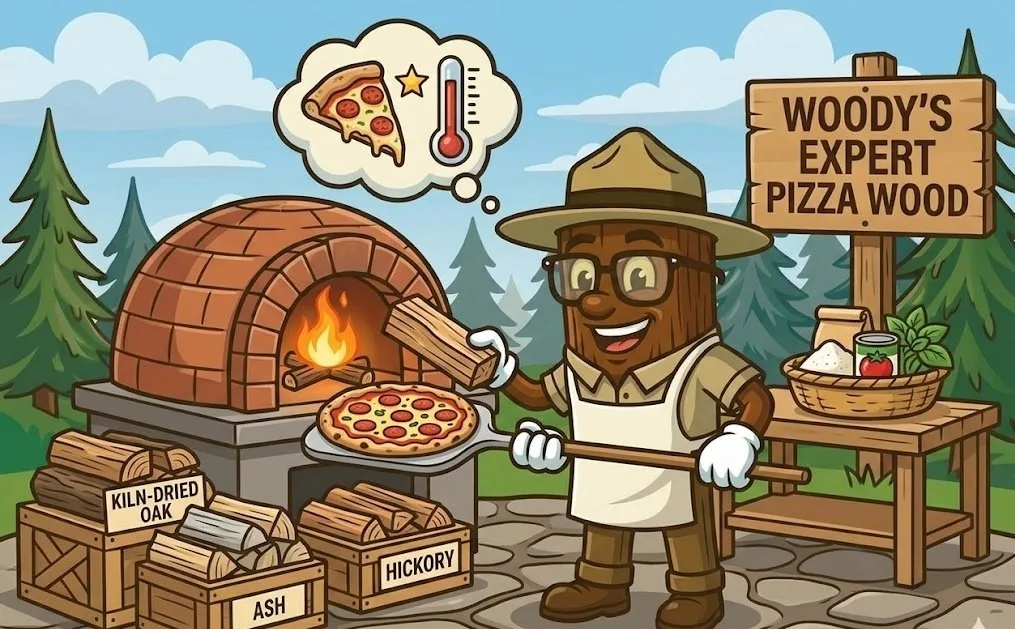
Kiln-dried oak is the best wood for a pizza oven, but species choice is only half the equation. Heat control and coal management are what actually separate a perfect crust from an inconsistent one. Here is what Wisconsin's top wood-fired restaurants use, and how they do it.
Tyler M
9 min read
Last Updated:
March 29, 2026
Kiln-dried oak is the best wood for a pizza oven, but species choice is only half the equation. Heat control and coal management are what actually separate a perfect crust from an inconsistent one. Here is what Wisconsin's top wood-fired restaurants use, and how they do it.
The best wood for a pizza oven is kiln-dried oak firewood. It burns hot, produces a steady coal bed, and adds a neutral smoke that does not overpower your toppings. But picking the right species is only half the equation. The other half is understanding how to use that wood to actually control heat and manage coals during a cook session. That is where most guides fall short, and where the difference between a perfect crust and an inconsistent one actually lives.
We supply kiln-dried firewood to wood-fired restaurants including Hard Rock Hotel and Casino and Mr. B's Steakhouse in Milwaukee. What we have learned from those accounts is that species choice and fire management are equally important. This guide covers both.
Quick Reference: Best Woods for Pizza Ovens
Best overall: Kiln-dried oak — high heat, neutral smoke, long coal bed
Best for flavor: Cherry or apple — light, sweet smoke, good coals
Best for intensity: Hickory — excellent heat, strong smoke (blend 70/30 with oak)
Best for restaurants: Oak for sustained back-to-back service
Avoid: Pine, cedar, treated or painted wood of any kind
Why Wood Quality Changes Everything in a Pizza Oven
A pizza oven needs to reach and hold 700 to 900 degrees Fahrenheit. At those temperatures, wood quality stops being a preference and becomes a performance variable. Every piece of firewood contains some moisture, and that moisture has to cook off before the wood can burn efficiently. In a pizza oven, that wasted energy is wasted heat.
Seasoned wood, even good seasoned wood, typically holds 15 to 25 percent moisture. Our kiln-dried wood runs consistently below 15 percent, and often closer to 10 percent. In practice, that means less steam in the oven dome, faster preheat, more consistent temperatures, and a drier burn that does not load up the interior with excess smoke or soot. For home pizza nights this is a comfort improvement. For restaurants doing 80 covers on a Saturday night, it is the difference between a consistent product and a problem.
Beyond moisture, species matters. Hardwoods are the only real option. They are denser, release more BTUs per piece, and hold together long enough to form the glowing coal bed your oven needs between pizzas. Softwoods like pine burn fast, produce heavy soot, and leave creosote buildup that can eventually become a fire hazard in a confined oven chamber.
The Best Wood for Pizza Ovens: Species by Species
Not all hardwoods perform the same. Here is how the main options compare for pizza oven use specifically, rated on the things that actually matter: heat output, coal quality, and smoke profile.
The standard for pizza ovens worldwide. Dense, long-burning, and low-smoke. Oak does not fight your toppings for attention. It builds a deep, even coal bed that maintains cooking temperature through multiple back-to-back pies. Our kiln-dried oak is what Wisconsin restaurants rely on for exactly this reason.
Burns as hot as oak and makes outstanding coals. The catch: the smoke is strong. Used alone it can overpower a pizza. The solution most serious cooks land on is a 70/30 blend of oak to hickory. You get the heat and coal depth of both species with smoke that complements rather than dominates.
Lower heat output than oak, but cherry is the flavor choice for home cooks who want something more interesting. The mild sweetness works well with fresh-ingredient pizzas and does not overwhelm lighter toppings. Kiln-dried cherry smells noticeably better than seasoned cherry, which can carry off-notes from outdoor storage.
A classic fruitwood choice and widely recommended by home pizza communities. Burns hotter than its density would suggest, with a pleasant aroma and light smoke. The main limitation is availability at scale and shorter burn times compared to oak. Best used as an accent wood alongside a denser hardwood base.
Essentially a milder hickory. Good heat output, decent coal formation, and a smoke profile that works for pizza without overpowering it the way straight hickory can. A solid option if you want warmth and subtle complexity without committing to a blend.
Avoid These Species
Never use pine, cedar, fir, or spruce in a pizza oven. Softwoods contain resins that produce creosote and black smoke inside your oven. Never use treated, painted, or laminated wood of any kind. The smoke from chemically treated wood is toxic and does not belong near food under any circumstances.
Species Comparison Table
Species
BTU/Cord (approx.)
Coal Quality
Smoke Level
Pizza Oven Rating
Oak (kiln-dried)
24–28M
Excellent
Low
Best Overall
Hickory
25–28M
Excellent
High
Blend with Oak
Pecan
25–27M
Good
Medium-Low
Very Good
Cherry
20–23M
Good
Low
Good (flavor)
Apple
18–22M
Decent
Low
Good (home use)
Pine / Softwoods
Low
Poor
Very High
Do Not Use
Heat Control: How Wood Selection Affects Temperature
A pizza oven fire has two distinct phases, and the wood you use in each phase should be different. Most guides treat it as one continuous process. It is not.
Phase 1: Building to Temperature (cold start to 700°F+)
Start with small, thin splits, roughly 1 to 2 inches in diameter. These catch quickly and generate fast, aggressive heat that drives the oven floor and dome up to cooking temperature. Push them toward the center or rear of the oven floor and feed the fire consistently. Do not load the oven with large pieces at this stage. Large pieces take too long to catch and slow the temperature climb.
Phase 2: Maintaining Cooking Temperature (600–700°F for sustained cooking)
Once the dome glows white and the floor is fully saturated with heat, switch to medium splits, roughly 3 to 4 inches. At this stage you are not trying to add heat, you are trying to hold it. Dense hardwood like oak maintains this phase well because it burns slowly and steadily rather than spiking and dropping. Add one piece at a time, pushing the active fire to the side of the oven to keep the center clear for cooking. The oven does the work, not the flame.
Split size is the variable most home cooks overlook. A 6-inch round split and a 2-inch split from the same oak tree release dramatically different amounts of energy at dramatically different rates. Having a range of split sizes available before you start cooking gives you actual control over your oven temperature, rather than just hoping it holds.
Coal Management: The Real Secret to Consistent Results
The coal bed is the most underappreciated factor in wood-fired pizza cooking. When you are ready to cook, you should be cooking off coals, not off active flame. The dome retains radiant heat, the floor stores conductive heat from below, and the glowing coal bed on the side contributes an even, ambient heat that helps cook the top of the pizza. This three-source heat environment is what makes wood-fired pizza taste the way it does.
Active flame cooking is actually the less desirable state for pizza, because live flame creates uneven heat and puts moving smoke directly into the food zone.
What a Good Coal Bed Looks Like
You want a consistent, glowing bed of red-orange coals pushed to one side of the oven, roughly 3 to 4 inches deep. There should be no large unburned chunks, no black sections, and no active flame shooting across the cooking floor. If you push a piece of wood onto the coals and it catches within 30 to 45 seconds, your coal bed is ready.
How Species Affects Coal Quality
Oak and hickory produce deep, long-lasting coals that hold temperature for extended cooking sessions. This is the main reason commercial pizzerias standardize on oak. Cherry and apple produce decent coals, but they burn through faster, which means you need to add wood more often during a long cook. For a home session of 4 to 6 pizzas this is fine. For a restaurant doing dozens of covers, it is a liability.
Managing Coals During Service
Push the coal bed to the back or one side of the oven before each pizza goes in. Use a metal brush or peel to clear the floor of any ash or debris in the cooking zone. Keep one or two small pieces of wood near the coals to feed between pies when you need to bring the temperature back up. Do not add large pieces mid-service. They produce too much smoke during ignition and cause temperature spikes that are hard to control when you are trying to cook consistently.
Kiln-Dried vs Seasoned Wood for Pizza Ovens
Seasoned firewood is not bad wood. Air-dried for 12 to 18 months, seasoned hardwood can perform well in open fire pits and outdoor settings. But in a pizza oven, where you are trying to hold precise temperatures inside an enclosed ceramic or brick chamber, the difference between 20 percent moisture and 10 percent moisture is measurable.
Moisture in the wood becomes steam when it burns. That steam reduces the available combustion energy, increases your preheat time, and introduces humidity into the oven dome. In a pizza oven that humidity can affect crust texture, particularly in artisan-style thin crust where you are trying to achieve a dry, crackly base. Experienced pizza cooks will notice the difference between a kiln-dried oak session and a seasoned oak session in their oven performance.
The Best Burn Firewood process: Our kilns run at 265°F for 24 to 32 hours. Oak, being one of the densest hardwoods we process, sits at the longer end of that range. The result is wood that consistently measures below 15 percent moisture, often closer to 10 percent. We are USDA and WDATCP certified, and our wood is bug-free and mold-free when it arrives. For a wood-fired restaurant, that consistency matters at every service. Learn more about the kiln-dried process.
Frequently Asked Questions
What is the best wood for a wood-fired pizza oven?
Kiln-dried oak is the best all-around wood for a pizza oven. It reaches high temperatures efficiently, produces a consistent coal bed, and burns with low, neutral smoke that does not interfere with food flavor. For home cooks who want more aroma, cherry or apple are excellent choices. For restaurants needing sustained output, oak is the standard.
Can you use oak in a pizza oven?
Yes. Oak is the most widely used firewood in commercial pizza ovens worldwide. It burns hot and long, produces very little smoke relative to its heat output, and forms an excellent coal bed for consistent back-to-back cooking. Red and white oak both work well. Kiln-dried oak performs better than seasoned oak because the lower moisture content means faster heat-up and less steam inside the oven dome.
Is kiln-dried wood better for pizza ovens than seasoned wood?
Yes, particularly for enclosed pizza ovens. The lower moisture content in kiln-dried wood (typically below 15 percent vs. 15 to 25 percent for seasoned) means faster preheat, more consistent oven temperatures, and less steam that can affect crust texture. For a restaurant doing multiple sessions per day, kiln-dried is the only practical choice.
How much wood do I need for a home pizza session?
Plan on 5 to 10 pieces of firewood for a typical home session of 4 to 8 pizzas. You will use more during preheat and fewer once the oven is up to temperature and holding via the coal bed. Having a mix of thin splits for startup and medium splits for the cooking phase gives you better control than using uniform pieces throughout.
Ready to cook with the right wood? We deliver kiln-dried oak and specialty cooking woods across SE Wisconsin and the greater Chicago area. Our restaurant clients depend on the same wood we sell to home cooks. Shop kiln-dried oak or learn about our restaurant firewood delivery program.
Tyler M is the Co-Founder of Best Burn Firewood in Wisconsin, where he works directly in sourcing, processing, kiln-drying, packaging, and delivering firewood for residential and commercial customers. His writing is based on first-hand experience with wood species performance, moisture control, storage, and burn quality, including how different hardwoods behave in fireplaces, wood stoves, and outdoor fires. Tyler publishes practical guides to help customers choose the right firewood and burn it more safely, cleanly, and efficiently.
best wood for pizza ovenfirewood for pizza ovenpizza ovenpizza oven woodpizza woodwood fired pizza
Related Blog Posts
Is Oak Good Firewood? Heat Output, Burn Time & Seasoning Tips
Oak is the go-to firewood for overnight burns and serious home heating — but it carries more moisture than almost any other hardwood, and red oak and white oak don't perform the same. We break down BTU by species, what it actually takes to dry oak properly, real kiln data from our operation, and why restaurants request oak more than any other species.
Is Maple Good Firewood? Heat Output, Burn Time & What to Expect
Maple is one of the most common firewood species in Wisconsin — but sugar maple and silver maple perform very differently. We break down the real BTU numbers by species, how maple burns, seasoning vs kiln-dried, and where maple fits in a mixed hardwood load.
Is Birch Good Firewood? Heat Output, Burn Time, What to Expect
Birch is good firewood for fireplaces and wood stoves, offering high heat and a steady burn. Learn heat output, burn time, and how birch compares to hardwoods.
Safely Transporting Firewood: Key Rules You Must Know
Have you ever considered the type of firewood you use for your fireplace or grill? The quality of your firewood can significantly impact your fire experience, whether it’s the ease of lighting the fire, the longevity and intensity of the burn, or even the aroma produced. Enter kiln-dried firewood, a premium firewood option that guarantees an optimal burn experience for any occasion.
Is Ash Good Firewood to Burn? Discover Its Benefits!
Is ash good firewood to burn? Learn about its benefits, including efficient heat output and low smoke production. A perfect choice for your firewood needs!
Cleaner Fires: Using a Moisture Meter for Firewood
Ensure cleaner, more efficient fires with a moisture meter for firewood. Learn how to choose the right meter to improve your wood-burning experience today!
Wondering how to start a fire with wet wood? Our fire-loving mascot Woody is here to show you the tricks, tools, and tips to turn damp logs into a crackling success. Let’s fire it up... rain or shine.
Why does firewood pop during burning? Firewood pops during burning because moisture and resin trapped inside the wood turn into steam when heated, creating pressure that bursts through cracks. Read the article below, to find out why your firewood is popping!
What Firewood Is Best for Burning In Your Fireplace?
From our experience, Oak and Hickory are the best firewood choices for a long-lasting, efficient burn in your fireplace. But every home and fire is different—read our guide below to see which firewood is best for your needs! 🔥
How Much Firewood Is in a Cord? Essential Facts You Need to Know
Understanding how much firewood is in a cord is essential for making informed purchases, ensuring fair transactions, and maximizing efficiency when using firewood. A full cord measures 4 feet high × 4 feet wide × 8 feet long (128 cubic feet), but factors like stacking method, log size, and wood type can affect the actual burnable volume.
Why Should I Choose Kiln Dried Firewood? Learn what Kiln Dried Firewood is, and Why You Need It
Have you ever considered the type of firewood you use for your fireplace or grill? The quality of your firewood can significantly impact your fire experience, whether it’s the ease of lighting the fire, the longevity and intensity of the burn, or even the aroma produced. Enter kiln-dried firewood, a premium firewood option that guarantees an optimal burn experience for any occasion.
Firewood 101: Discover The Best Firewood to Burn for Maximum Heat and Efficiency
Ever wondered why some fires burn brighter, hotter, and longer than others? The secret lies in choosing the best firewood for your specific needs. This comprehensive guide of wood burning tips will help you discover the best firewood to burn, based on their characteristics, ideal uses, and proper preparation to maximize heat, efficiency, and create a cozy atmosphere.
After experiencing firewood deliveries filled with dirt and debris, we now hand-pick and load each order to ensure you receive clean, high-quality wood. This guarantees the exact amount of wood without the extra mess.
Call us at any time of the year, whether it's in the hot summer or freezing winter.
100% kiln dried Wisconsin Firewood for Sale.
Stacking of your firewood delivery upon request
FIREWOOD Delivery To following areas
South Eastern Wisconsin and Waukesha County
Firewood delivery in South Eastern Wisconsin and Waukesha County